How to Choose a Brazilian Jiu-Jitsu Academy in Miami: The Honest Checklist
Miami has more Brazilian Jiu-Jitsu academies per capita than almost any U.S. city. For a parent or a new adult student, that abundance becomes the problem: every gym looks great on Instagram, every website promises world-class coaching, and every free trial ends with a pitch to enroll that day. Most people choose wrong the first time — they pick the closest gym, or the loudest marketing, or whichever coach was nicest on the phone — and quit within three months.
This guide is written by a coach who has spent 20+ years teaching BJJ in South Florida. It is not a list of "top 10 gyms" — I will not name and rank competitors, because gym quality changes as coaches move, and any snapshot would be wrong in six months. Instead, this is a framework: what actually matters, what looks important but isn't, and the specific questions to ask on your first visit.
What actually matters (in this order)
1. The head coach's background — and more importantly, their teaching history
A black belt with 15 years of competition and 0 years of teaching is not automatically a good coach. Some of the best BJJ athletes in the world are terrible teachers — they never had to learn the mechanics consciously, so they cannot explain them. Conversely, mid-tier competitors often become outstanding coaches because they had to break down every movement to compensate for lacking raw talent.
What to look for: a head coach with a verifiable black belt under a recognized lineage, at least 10 years of competition experience, AND at least 5 years of teaching at their current academy. Longevity matters because it signals student retention — if a coach has run the same gym for a decade, their students keep coming back. That is the single highest-signal metric.
2. Who actually teaches your class
At many academies, the famous head coach appears in the marketing but rarely teaches the class you or your child will attend. A promoted blue or purple belt runs the floor 4 nights a week. That can be fine — good senior students become good teachers — but you need to know who is teaching before you enroll, not after.
Ask directly: "Who teaches the Tuesday 6:00 PM class? Who teaches Saturday 10:00 AM?" If the answer is hedged, that is your answer.
3. Class size and student-to-coach ratio
Group classes with 40 students and 1 coach cannot provide individual feedback. Your child will drill a technique incorrectly for 45 minutes, and no one will correct them. After a year, they will be a year deeper into bad habits.
Ideal ratios: adult classes under 20 students per coach; kids classes under 12 per coach. Anything beyond that is a warehouse, not an academy.
4. Mat space per student
South Florida real estate is expensive, and some academies cram too many students into too little mat. When two people are rolling in a space meant for one, injuries happen. Look at the mat during a real class. If students are constantly bumping into each other, that is not normal.
5. The student culture
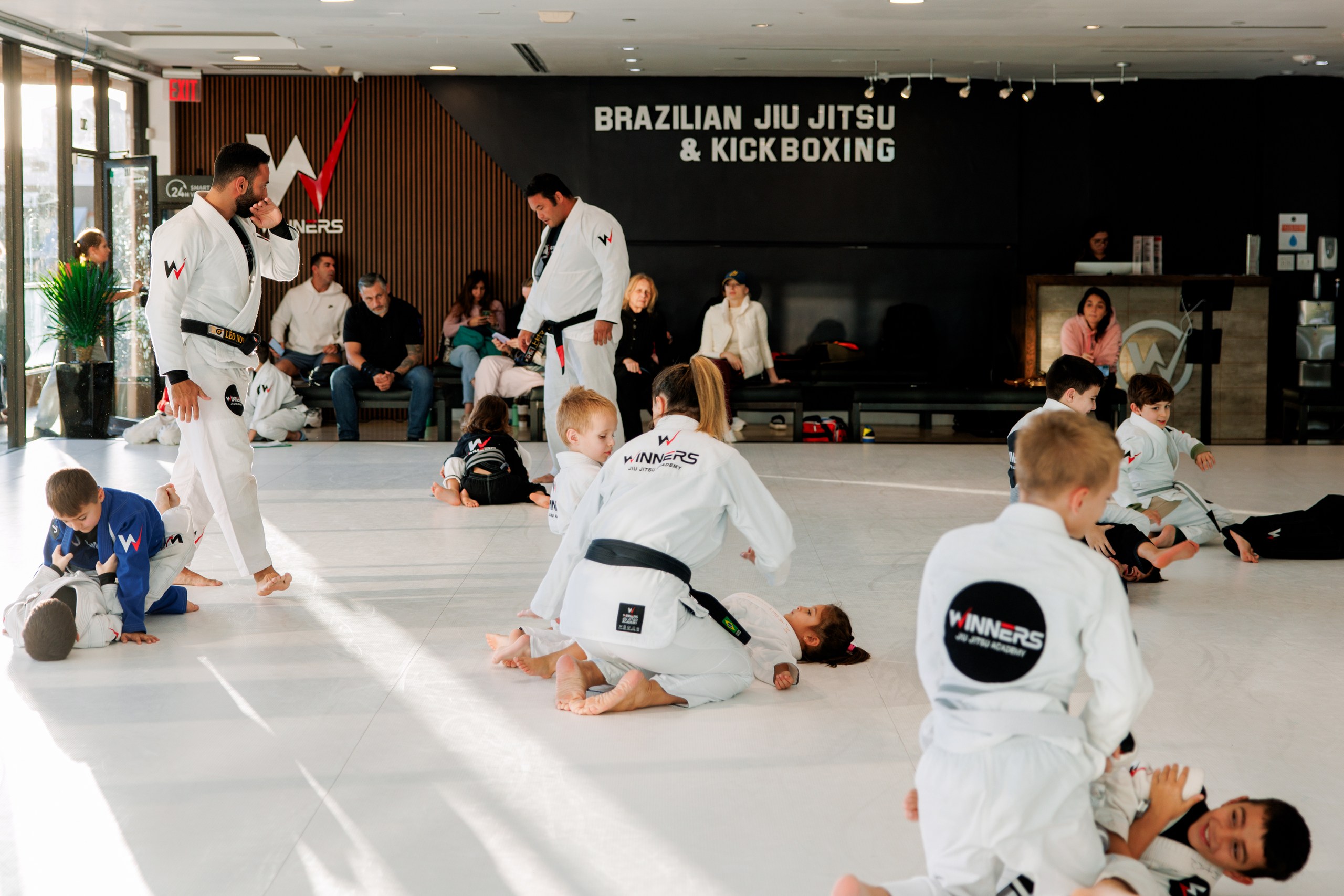
Walk the academy during a class. Watch how white belts interact with upper belts. At a healthy academy, experienced students are patient with new ones, drill at the new student's pace, and introduce themselves. At a toxic academy, upper belts use white belts as practice dummies, try to prove themselves in rolls, or ignore beginners entirely. You can feel the difference within 10 minutes of watching.
What does NOT matter (but people obsess over)
Fancy equipment and interior design
Cold plunge, sauna, espresso bar, designer locker room — none of it makes you better at BJJ. A clean mat, good air conditioning, clean bathrooms, and functional lighting are all you need. Instagram-perfect gyms often cost 40% more because you are paying for the aesthetics.
The number of world champions the academy has produced
Unless your goal is to become a world champion, this metric is nearly useless. Competition-focused academies often neglect hobbyist adults and kids programs. Many of the best recreational BJJ academies have no top competitors at all — they specialize in kids, confidence, fitness, and self-defense, which is what 95% of students actually want.
Free-trial pressure tactics
If an academy requires you to commit on the day of your free trial, walk out. Every legitimate academy understands that a good student takes time to decide. Pressure on day one is a red flag that the business model depends on conversions, not retention.
The 8 questions to ask on your first visit
- "Who is the head coach, and how long have they taught here?" Looking for 5+ years in the same location.
- "Who teaches the specific classes I would attend?" Looking for named, consistent coaches.
- "What is the average class size?" Looking for honesty — "it varies" is fine; "I don't know" is not.
- "What belt ranks are currently training here?" A healthy academy has all belts, including multiple black belts who still train — not just teach.
- "What is your student-to-coach ratio in the program I would attend?" Especially important for kids classes.
- "Can I watch a full class before enrolling?" The answer must be yes. If you're told to "come try one instead," something is hidden.
- "How do you handle injuries?" A thoughtful answer involves first-aid protocol, medical referral, and insurance. A dismissive answer ("we don't really have injuries") is disqualifying.
- "What happens if I want to take a month off?" Good academies offer membership freezes. Academies that lock you into strict contracts without pause options are optimizing for their cash flow, not your life.
Red flags that should end the conversation
- Unexplained long-term contracts (12+ months with no cancellation provision). BJJ is a long-term relationship — it should not require being locked in financially to sustain it.
- Pressure to sign during the free trial.
- No visible black belts training on the mat regularly. If no experienced practitioner chooses to train there, why should you?
- A coach who talks exclusively about themselves during your tour — their medals, their lineage, their fighting record — and asks nothing about you or your goals.
- Dirty mats or strong odor. Skin infections (staph, ringworm) spread on poorly maintained mats. Walk the floor. Smell the air. If something is off, trust your instincts.
- No liability insurance. Ask. A real business has it.
Miami-specific considerations
Three things about South Florida specifically:
Traffic is the silent killer of BJJ consistency. An academy that is "only" 20 minutes away in no traffic becomes 40 minutes in rush hour. If you have to fight I-95 or 163rd Street Causeway every class, you will quit within a year. Pick an academy you can reach in under 15 minutes from where you actually are at class time. If you work downtown and live in Aventura, an academy near your office may serve you better than one near your home.
Humidity matters more than you think. Mats in poorly ventilated South Florida gyms become petri dishes. Good academies run industrial HVAC and disinfect mats between every class. Ask. A legitimate academy will show you their cleaning protocol.
Language coverage. Miami is multilingual. If English is your second language — or if you want your child to learn BJJ in your family's native language — ask which languages the coaches speak. At our academy we teach in English, Spanish, Portuguese, and Russian, reflecting Sunny Isles and Aventura's real demographics. Academies that teach only in English in a Spanish-speaking neighborhood are missing half their potential community, which also tells you something about their local roots.
How to choose between two good options
If you have narrowed it down to two honest, well-run academies, the tiebreaker is simple: which coach do you trust more with your time (or your child's time)? That is a gut read, and after two full visits to each academy, you will know. Don't overthink it. Both will work. Consistency at either beats bouncing between both.
What we do at Winners
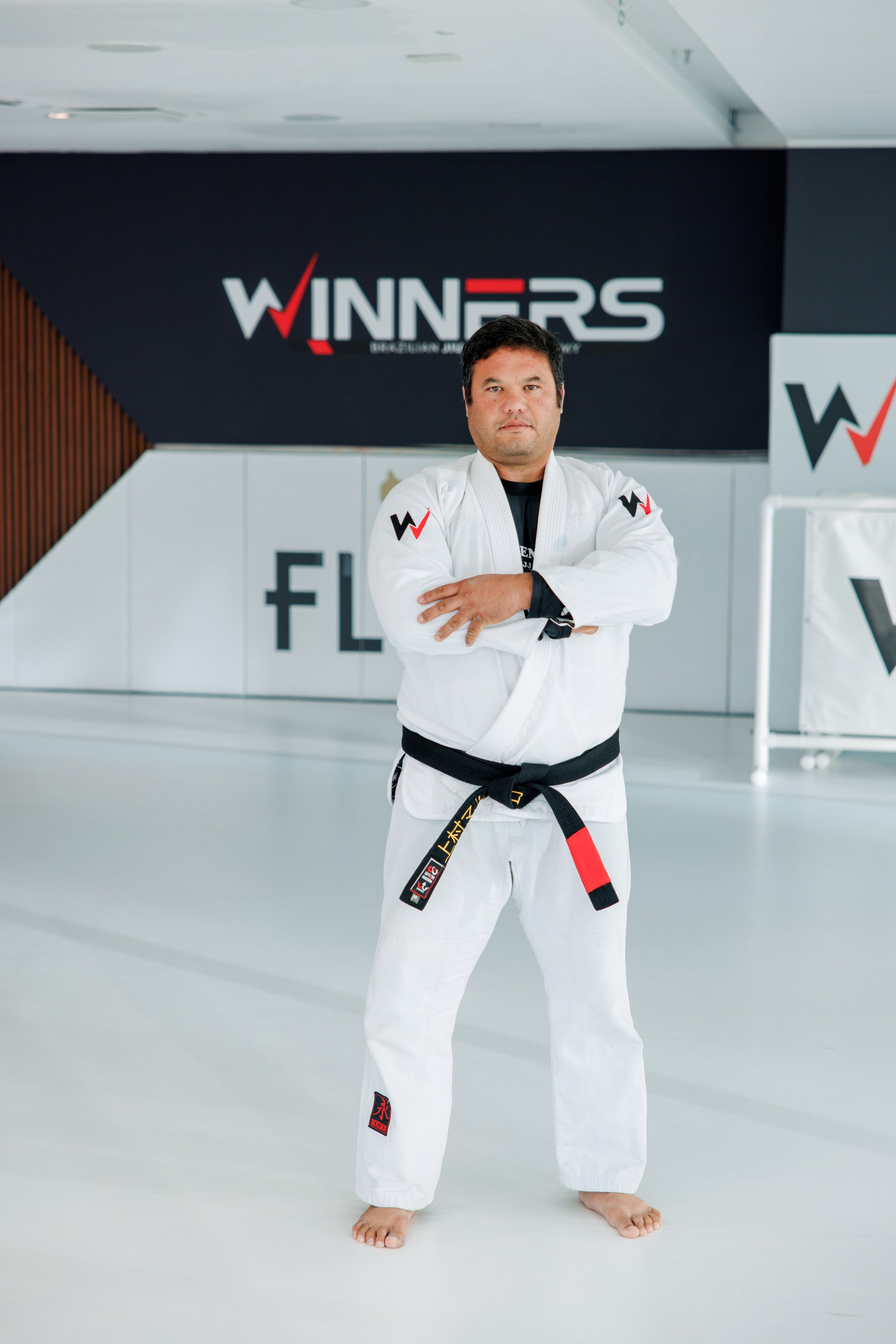
We are a Brazilian Jiu-Jitsu academy in Sunny Isles Beach, FL, serving Aventura, Bal Harbour, Surfside, and the broader Gold Coast. Head coach Jonatas Gurgel has been at this location since 2012 — the longevity metric mentioned above. We run adult classes (beginner through advanced), a full kids ladder from ages 3 through 12, kickboxing, and private lessons. Class sizes are capped. We speak English, Spanish, Portuguese, and Russian on the mat. There is no pressure to sign on your trial day.
If you're exploring, book a free trial or call (786) 527-2462. If you're in Aventura, Bal Harbour, North Miami Beach, or further out, the Aventura, Bal Harbour, and North Miami Beach pages break down the drive. Either way — use the checklist above. Good luck.