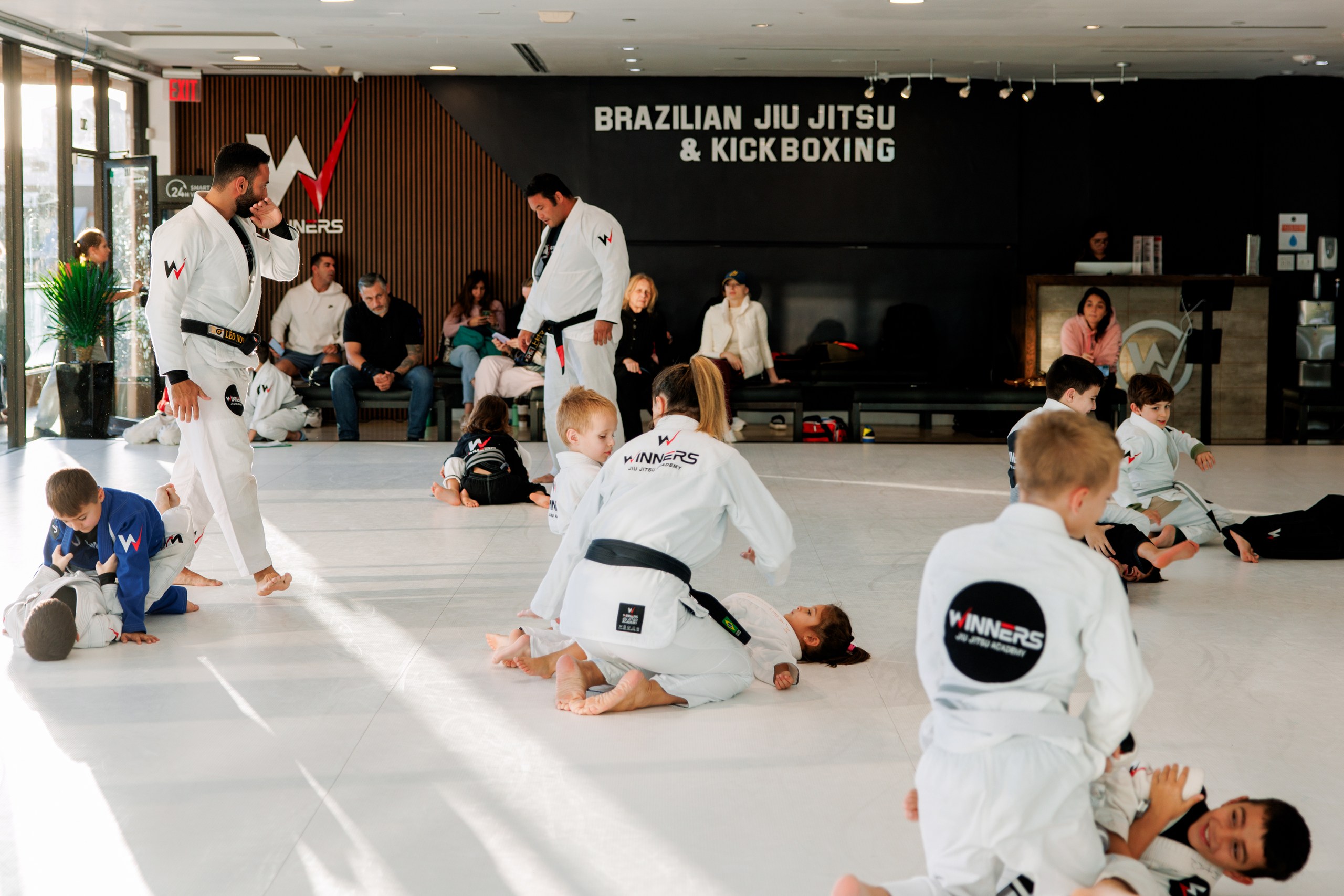
What Does Brazilian Jiu-Jitsu Cost in Miami? The Honest Breakdown
Prospective students and parents ask us this every week: what does Brazilian Jiu-Jitsu actually cost in Miami? Academies rarely publish prices publicly, websites are vague, and the number you get on a sales call is often higher than what existing members pay. This article is an honest cost framework — not a list of specific competitor prices (those shift constantly and would be misleading) but a realistic breakdown of every category you will actually pay for.
By the end you will have a clear answer to: what should my total annual budget for BJJ look like in Miami, and where is the money going?
The 6 real categories of BJJ cost
- Monthly tuition (the headline number)
- Enrollment and initiation fees (one-time)
- Gear (gi, belt, rash guards, mouthguard)
- Promotion and belt ceremony fees (if your academy charges them)
- Competitions (tournament fees, travel, coaching)
- Private lessons (optional but often worth it)
1. Monthly tuition
In Miami, the honest range for adult BJJ is roughly $180 to $300 per month for unlimited classes at a legitimate academy. Kids programs typically run $150 to $250 per month, with sibling discounts often knocking 15-25% off the second and third child.
Why the wide range? Four factors drive it:
- Coach pedigree. A gym with a world champion head coach charges more than a gym where the coach is a recently promoted black belt. This is usually worth paying for, up to a point — coaching quality is the single biggest lever on your progression.
- Number of classes per week. Academies typically offer 2-day, 3-day, or unlimited plans. Unlimited is rarely worth it unless you're training 4+ times per week.
- Real estate. Sunny Isles, Bal Harbour, Aventura, Coral Gables, and Miami Beach academies pay a premium for floor space that gets passed along. Academies in Doral, Miami Lakes, or Pembroke Pines tend to run 15-25% cheaper for similar instruction.
- Amenities. Gyms with recovery rooms, cold plunges, merchandise shops, and aesthetics-heavy interiors charge a premium. You are paying for the experience, not the instruction.
What is NOT a good reason for a higher price: bigger class size. If a gym charges more because it has more students, you are subsidizing someone else's discounted deal.
2. Enrollment and initiation fees
Some academies charge a one-time enrollment fee between $100 and $300. Some include the first gi; some don't. Some waive it during promotional periods. These fees are usually negotiable — many academies drop them if you ask directly, especially if you mention you're comparing between two academies.
A legitimate enrollment fee covers real costs: liability insurance registration, IBJJF student database fees (for competition-bound academies), and initial gi/equipment. An enrollment fee above $300 is a sales tactic, not a real cost.
3. Gear
This is where most new students overspend out of enthusiasm. Your first-year honest gear budget should be:
- Gi (uniform): $80–$200. A starter gi from a reputable brand is perfectly fine. You do not need a $400 competition gi until you are actually competing.
- Belt: included with a gi or $20–$40 separately. Your first belt is white and it will be white for a year or more. Don't spend more than $30.
- Rash guard: $30–$70. Only needed if you will train no-gi. Most beginners do not for the first 6 months.
- Mouthguard: $15–$40. Boil-and-bite is fine.
- Flip-flops for walking to/from the mat: $10–$25. Required — you will train barefoot on the mat but must never walk into the bathroom barefoot (foot fungus and skin infections).
Realistic first-year gear total: $150–$350. After year one, gear is basically a sunk cost until you replace a gi every 2-3 years.
Where people overspend: buying 3 gis in the first month, buying "competition" gis they don't need, ordering from boutique brands at 2x markup. Stick with established BJJ gi manufacturers — the $140 gi fits and functions identically to the $340 one from the same brand.
4. Promotion and belt ceremony fees
This is the sneaky one. Some academies charge $75 to $300 per belt promotion — sometimes more for the ceremony event itself. Over 10 years of training to black belt, that can add up to $1,500 or more.
Our position: belt promotions should not be a revenue line. We do not charge for promotions at Winners. If an academy requires a fee to get the belt you've earned through training, ask why. Some academies justify it with engraved certificates, catered events, or IBJJF registration — those are real costs. Some simply charge because they can.
5. Competitions (if you choose to compete)
Most students never compete, and that's completely fine. For students who do:
- Tournament registration: $70–$150 per event for IBJJF. Local tournaments (Grappling Industries, Tap Cancer Out) typically $60–$100.
- IBJJF membership: $50/year if you want to compete in sanctioned events.
- Travel: if you compete at Pan Ams or Worlds, add hotel, flight, and meals.
- Coaching: most academies charge mat-side coaching fees for out-of-town events, typically $50–$150 per day.
- Competition gi (optional): $150–$300 for an IBJJF-approved gi in the right color.
A realistic annual competition budget: $300–$800 for local events, $1,500–$3,000 if you travel for Pan Ams or Worlds.
6. Private lessons
In Miami, private lessons range from $80 to $200 per hour, with world-class coaches at the top of that range. A single private with a good coach can accelerate your progress more than a month of group classes — IF you are past the pure-beginner phase.
For white belts: save the money. Group classes teach what you need.
For blue belts and above: occasional privates (one per month) are one of the highest-ROI investments in BJJ. For students preparing for competition, two privates per week is standard.
Total realistic Miami BJJ budget
Putting it all together, here is what a recreational BJJ student in Miami should actually budget for year one:
- Monthly tuition: $200/month average × 12 = $2,400
- Enrollment fee: $0–$200 (often waivable)
- Gear: $250 average
- Belt/promotion fees: $0–$150 (depending on academy)
- Total year 1: roughly $2,650–$3,000 for a non-competing adult
For kids, subtract about 20% — roughly $2,100–$2,500 per year per child. Sibling enrollments bring per-child cost down further.
How to negotiate without being awkward
Academies will often discount or flex on:
- Enrollment fees (most commonly waivable)
- 3-month vs 12-month commitments (annual prepay usually gets 10-15% off)
- Family plans (ask about sibling + parent combo rates)
- Referral credits (bringing in a friend may earn you a month free)
What you should never "negotiate down" is quality of instruction. If a gym offers you a deeply discounted rate to fill seats, ask yourself why they need to.
The value question
Here is the real math. If you train BJJ three times a week for a year at $200/month, you are paying roughly $17 per class. A CrossFit class costs $25-$35. A yoga class in Miami runs $20-$30. A personal trainer session starts at $80.
For that $17, you get: a full workout, technical instruction from a coach, a training community, real self-defense skill, and mental engagement most gym activities cannot touch. Per session, BJJ is one of the best values in the Miami fitness market.
Most students who stick with BJJ past six months say they would pay double. Most who quit by month three say it was too expensive. The variable isn't the price — it's whether you go often enough to extract the value.
If you're curious what training at Winners Jiu-Jitsu Academy looks like, your first class is free. We don't publish specific prices here because the right plan depends on how many classes per week you train and whether family members are enrolled — we'll discuss pricing after you've actually tried a class, not before. That order matters.