What Is the Best Age to Start Jiu-Jitsu? A Developmental Breakdown
The best age to start jiu-jitsu is between 5 and 7 for most kids — old enough to follow structured instruction, young enough to build movement habits before other sports lock in. Children can start as early as 3 in play-based programs, and adults can start at any age. That's the short answer; the developmental truth is more nuanced. There are genuine benefits at every age from 3 upward, but what a 3-year-old gets out of BJJ is entirely different from what a 10-year-old does, and trying to push a younger kid into what an older kid is doing usually backfires.
This guide breaks down what actually happens at each age, what to expect, and how to know when your specific child is ready.
Ages 3–4: "Tiny Warriors"
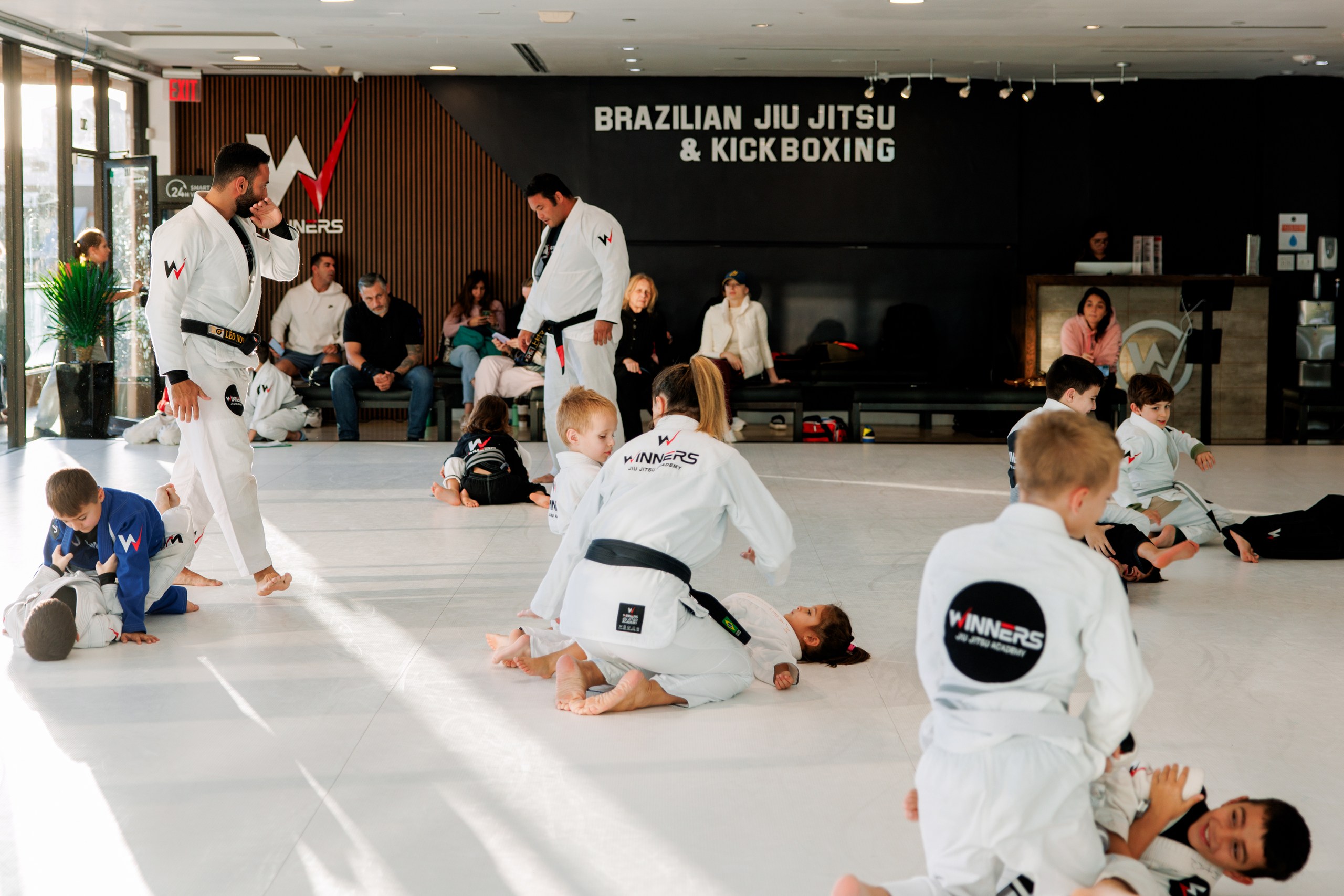
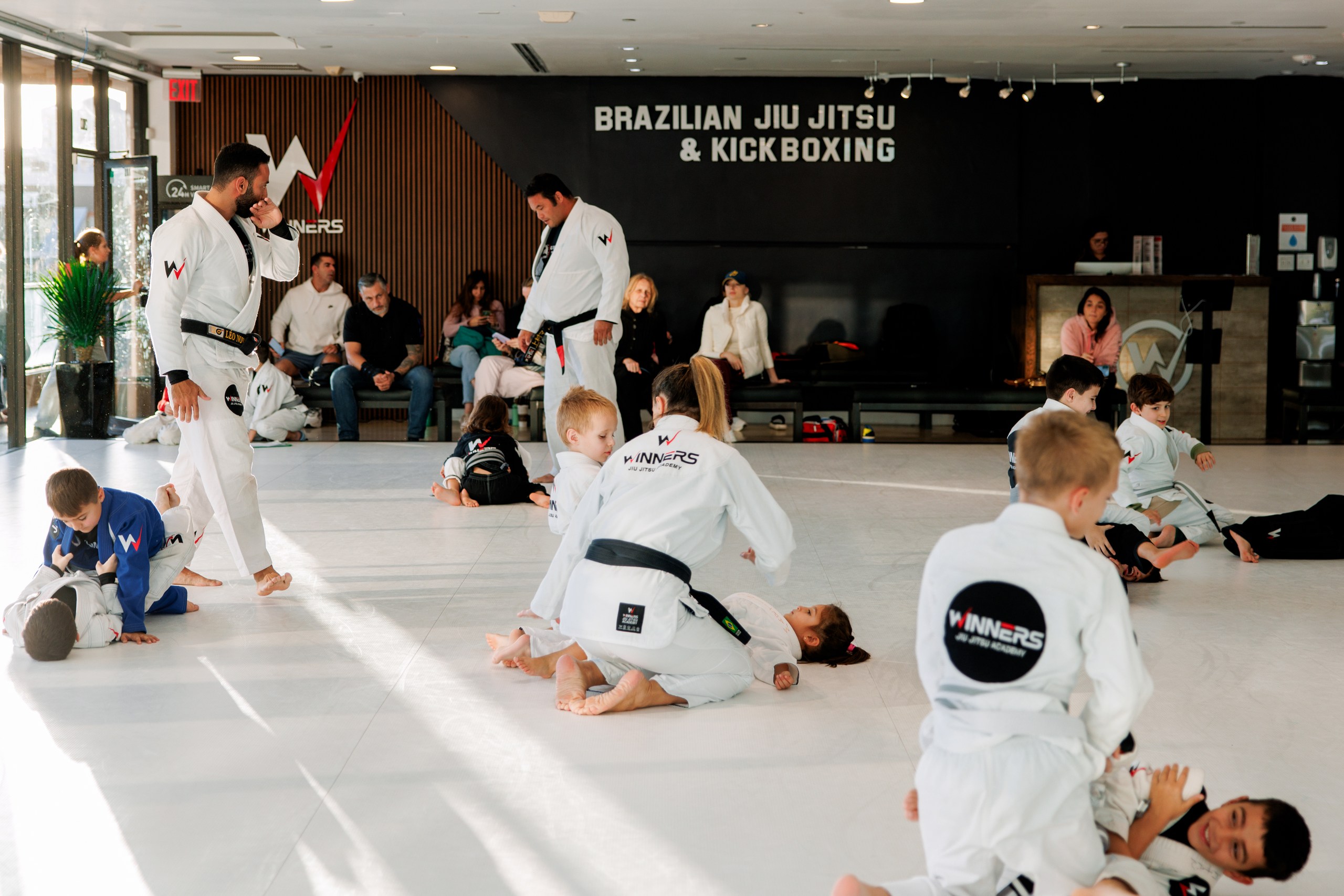
This is the earliest legitimate starting age. Classes at this stage are 30-45 minutes and are barely BJJ in the traditional sense — they're structured play. What kids learn:
- How to follow instructions from someone who is not their parent
- Taking turns and waiting
- Basic body awareness (where their arms, legs, and head are in space)
- Breakfalls — how to hit the ground without hurting themselves
- Animal movements (bear crawls, crab walks, rolls) that build coordination
What kids do NOT learn at this age: actual submissions, structured sparring, or BJJ-specific technique. That's developmentally correct. A 3-year-old's brain is not built for the kind of sustained concentration BJJ requires. If an academy markets "submissions for 3-year-olds," run.
Realistic expectation: your 3-year-old will probably cry in their first class. Many do. They'll ask to leave. By the fourth class, most kids are cautiously into it. By the tenth, they're asking to come more often. If your child still hates it after 8 classes, they're not ready yet — come back in 6 months.
Ages 5–7: "Little Winners"
This is when real BJJ starts, in age-appropriate form. Classes are 45 minutes. Kids start learning actual technique: mount, side control, guard, simple escapes. They also start positional sparring — controlled situations like "one kid starts in mount, the other tries to escape for 30 seconds."
What happens developmentally at this age:
- Concentration grows. A 5-year-old can focus for 10-15 minutes at a time; a 7-year-old closer to 25 minutes. Class structure accommodates this — lots of short activities with frequent transitions.
- Rules become real. Kids at this age are starting to understand fairness, consequences, and the idea that rules apply to everyone equally. BJJ is a perfect environment to reinforce this — you tap, you reset, you don't cheat.
- Social dynamics emerge. Kids make real friends in BJJ classes at this age. Some of the deepest childhood friendships we see at Winners form in the 5-7 age group.
The 5-7 age range is also where many parents report the first behavioral transformations. Kids who were shy in kindergarten often come into themselves in first grade, and a consistent BJJ class accelerates that process meaningfully.
Ages 8–12: "Full Winners"
This is the prime age for BJJ if we're being honest. Kids in this range have:
- Enough cognitive development to learn complex sequences of technique
- Enough physical coordination to execute them
- Enough emotional maturity to handle losing without collapsing
- Enough years of school routine to accept a structured 60-minute class
At this age, classes include full live rolling (controlled sparring), a much broader curriculum, and — for kids who want it — entry into competition. Most kids we see who reach a serious skill level in BJJ by 15 started consistently training around 8-10.
Kids at this age also benefit enormously from BJJ's confidence effect. Research published in the International Journal of Environmental Research and Public Health in 2023 found measurable improvements in self-esteem and emotional regulation among children who train martial arts consistently for six months or more — with the most pronounced benefits in the 8-12 age range, when identity formation is most active.
Ages 13–15: The transition
Teens face a specific challenge: they are too old for "kids class" culturally but often not quite ready for full adult class intensity. Good academies run a dedicated teen program or carefully transition teens into adult classes paired with patient training partners.
This age group is also when many kids quit if they haven't built strong BJJ habits earlier. The pull of other activities (school sports, social life, phones, gaming) is intense. Teens who committed by age 10 and stayed consistent often make it through; teens who start at 13 without prior mat time often drop by 15.
That said, starting at 13 is absolutely not too late. Every year, we see teens walk in for the first time and become strong practitioners within two years. The "too late" myth is one of the most harmful ideas parents pass to their kids about BJJ.
So what age is actually "best"?
The truthful answer depends on what you want:
- For maximum coordination and early discipline: start at 3-4 if your child can handle a structured environment.
- For real technical BJJ skill long-term: start at 5-7.
- For bullying prevention and confidence building: 8-12 is the sweet spot.
- For serious competition preparation: start by 10 at the latest.
- If your teen wants to try it: 13-17 is still completely fine. Many lifelong practitioners started at 15 or 16.
Signs your specific child is ready
Age alone doesn't determine readiness. These are the behavioral signs that matter more:
- Can follow a 3-step instruction from a non-parent adult
- Can separate from you for at least 30 minutes without distress
- Shows interest in physical activity (chasing, climbing, wrestling with siblings)
- Can handle losing at a simple game without melting down
If your 4-year-old checks all four, they're ready for Tiny Warriors. If your 6-year-old still struggles with the last one, consider waiting 6 months — losing on the mat is normal and your kid needs to be able to handle it.
Signs of a good kids' BJJ program (regardless of age)
- Ratio of coaches to kids at least 1:8. Fewer kids per coach means more feedback.
- Coaches who remember your child's name by week two.
- Classes that end on time — not 10 minutes late because the coach got carried away. Structure signals competence.
- Parent visibility. Can you watch the class? If not, something is being hidden.
- A genuine graduation/belt ladder your child can see progression on.
- Clear safety protocols — no full-contact submissions for kids under 8, no competitive rolling without supervision, mandatory breakfall training before any sparring.
What about starting "too young"?
It happens. Parents push 3-year-olds into 5-7 classes because the schedule is more convenient. The result is always the same: the 3-year-old is overwhelmed, can't keep up, feels constantly behind, and quits within a month with a negative impression of BJJ that can last years. Respect the age groups. They exist for a reason.
At Winners, specifically
We run three age-grouped kids programs:
- Tiny Warriors (ages 3–4) — 30-45 min, play-based, coordination-focused
- Little Winners (ages 5–7) — 45 min, real BJJ technique at age-appropriate pace
- Full Winners (ages 8–12) — 60 min, full curriculum including positional sparring
Plus Kids Kickboxing for cardio and striking fundamentals, and Kids Self-Defense / No-Gi for practical application. The ladder is designed so your child can stay at the same academy from age 3 through their teens without ever outgrowing the program.
When you're ready, your child's first class is free. No pressure to enroll, no card on file. Come see if it's right for them at the age they are now.