The Parent's Complete Guide to Kids Brazilian Jiu-Jitsu
Brazilian Jiu-Jitsu (BJJ) has become the fastest-growing children's martial art in the United States. This guide covers everything a parent needs to know before enrolling a child — age, safety, cost, what to look for in an academy, and what to expect in the first six months.
What is Brazilian Jiu-Jitsu?
Brazilian Jiu-Jitsu is a grappling martial art that focuses on ground fighting and submission holds. It originated in Brazil in the early 20th century through the Gracie family, who adapted traditional Japanese jujutsu to emphasize leverage, technique, and positional control over strength or size.
Unlike karate, taekwondo, or kickboxing, there are no strikes in BJJ — no punching or kicking. Practitioners use positioning, leverage, and joint locks to control and, if necessary, submit an opponent. For children, this means the skill set is inherently non-violent: kids learn how to defend themselves without ever learning how to start a fight.
What age is best to start Brazilian Jiu-Jitsu?
Children can safely begin BJJ as young as age 3 with the right program. Most academies structure their kids programs into age-appropriate groups:
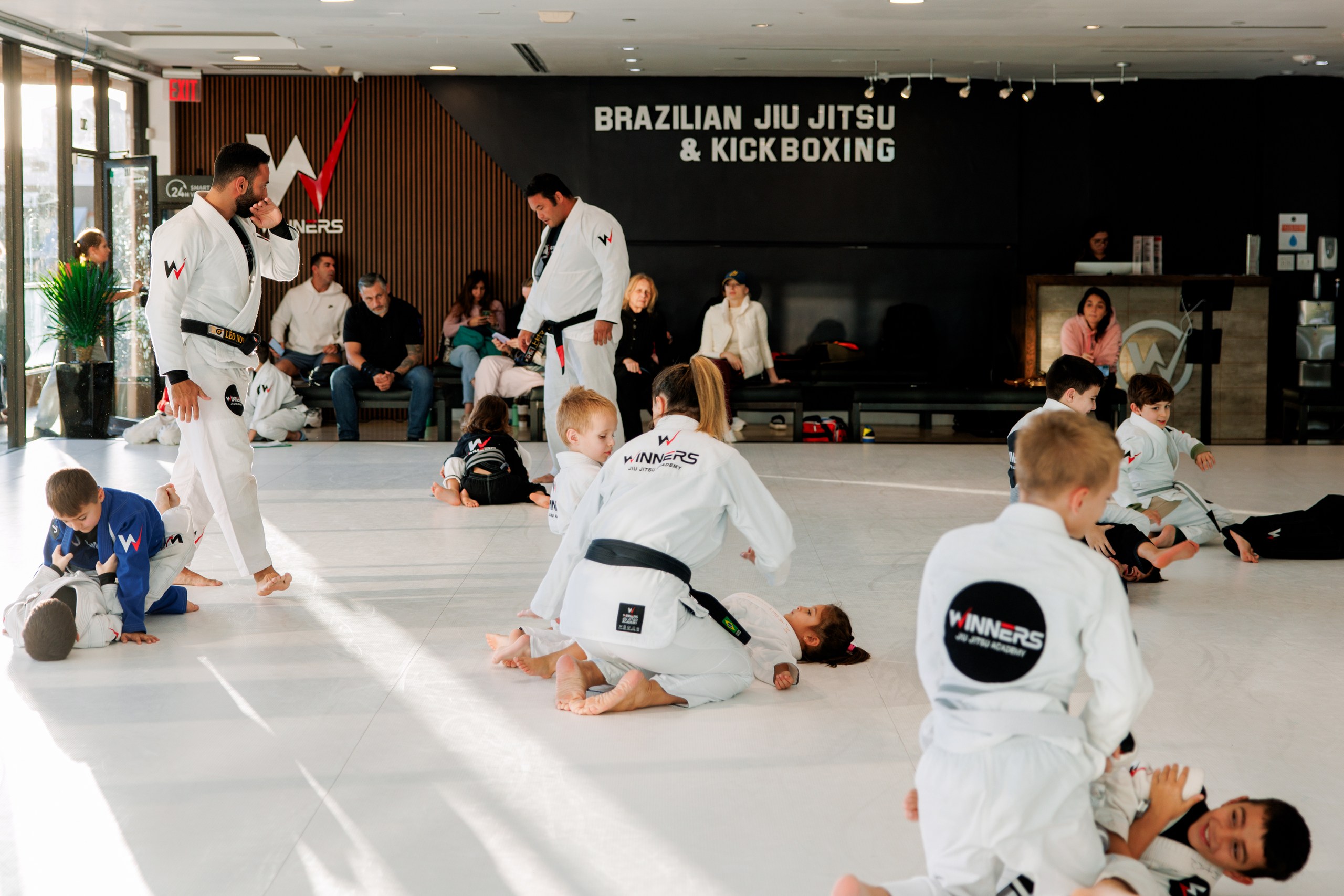
- Ages 3–4 (often called "Tiny Warriors" or similar): play-based classes focused on coordination, balance, listening skills, and basic movement. At Winners Academy, these are 45-minute sessions with games and very simple drills.
- Ages 5–7: real jiu-jitsu fundamentals introduced at an age-appropriate pace. Kids learn positions, escapes, and basic control. Discipline increases, but classes stay fun.
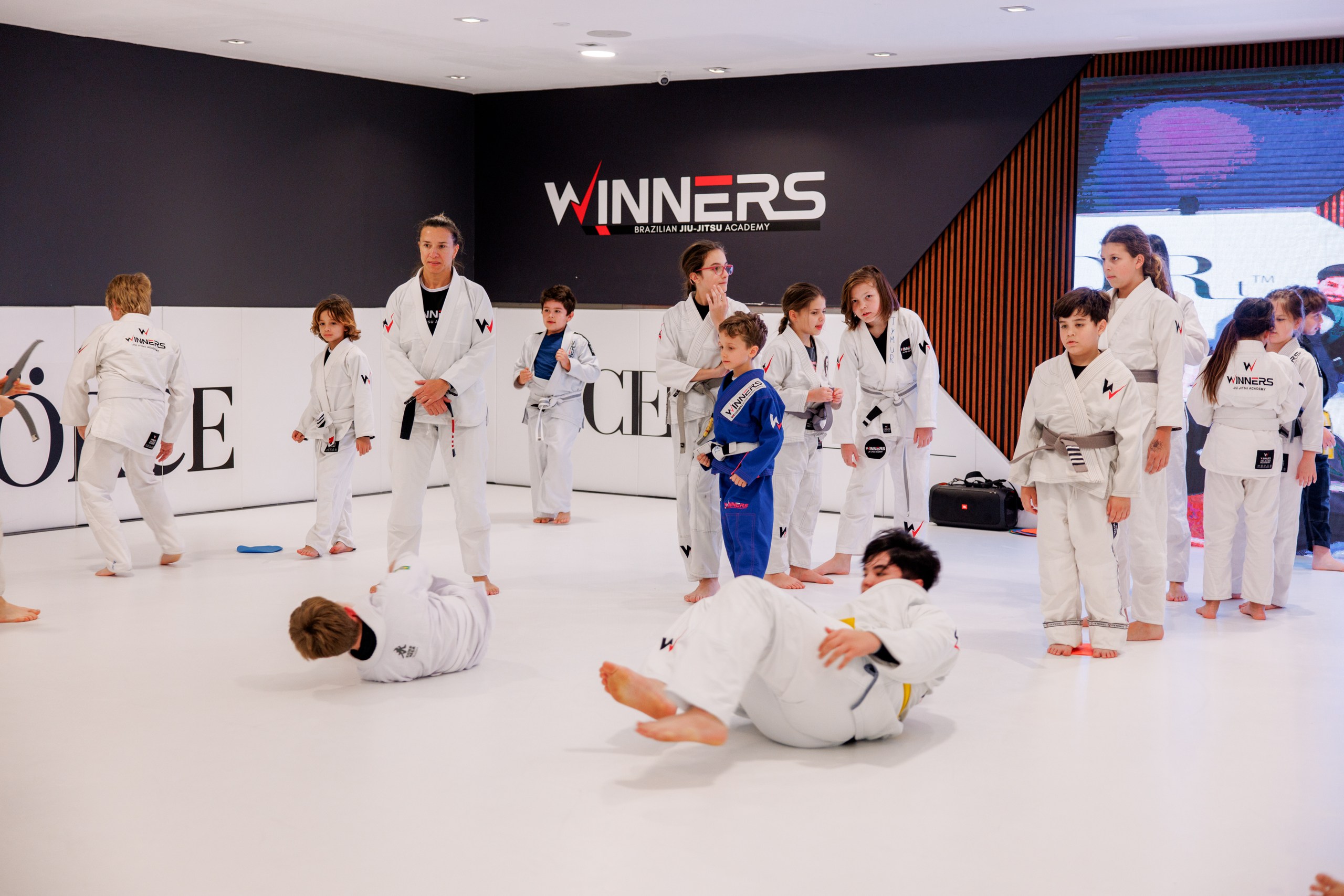
- Ages 8–12: the full jiu-jitsu curriculum. Kids at this age train 45-60 minutes per class, learn both Gi and No-Gi, and can participate in live rolling (controlled sparring) with peers.
- Teens (13+): often bridge into adult programs with modified intensity.
Is Brazilian Jiu-Jitsu safe for kids?
Yes — when taught at a reputable academy with age-appropriate programs, BJJ has one of the lowest injury rates of any kids' martial art. A 2014 study in the Journal of Sports Science and Medicine found BJJ's injury rate is significantly lower than contact sports like football, soccer, and even basketball. Because there are no strikes, the risk of concussion or impact injury is minimal.
The most common "injury" in a kids' class is a mild mat-burn from a fall, which is why good academies put significant time into teaching safe falls (breakfalling) as the very first thing kids learn.
How much does kids' Brazilian Jiu-Jitsu cost?
Monthly membership for kids programs typically ranges from $120 to $250 per month in the United States, depending on the academy's reputation, location, and the number of classes per week included. Sibling and family discounts are common.
At Winners Jiu-Jitsu Academy in Sunny Isles Beach, FL, we keep pricing personal — we do not list fixed numbers publicly because the right plan depends on how many classes per week your child attends and whether siblings are enrolled. Every prospective student gets one completely free trial class with no deposit or commitment. Book a free trial here.
Gi vs. No-Gi: what's the difference?
"Gi" is the traditional martial arts uniform — heavy cotton jacket, pants, and colored belt. "No-Gi" is training in shorts and a rash guard (athletic shirt). The two are substantively different:
- Gi involves grips on the collar, sleeves, and pants. The pace is slower and more strategic because grips give both practitioners more control.
- No-Gi removes those grips. The pace is faster, with more emphasis on underhooks, overhooks, and direct body control.
Most kids start with Gi because it teaches the fundamental control positions most clearly. By ages 8-12, most academies introduce both.
What do kids actually learn in a BJJ class?
A typical 45-60 minute kids' class follows this structure:
- Warm-up (10-15 min): solo drills like shrimping, forward rolls, and animal movements. Kids learn to move on the mat without hurting themselves.
- Technique (15-25 min): the coach demonstrates a position, escape, or submission. Kids pair up and drill it slowly.
- Positional sparring or games (10-15 min): controlled situations — e.g., one partner starts in mount, the other tries to escape. Kids practice real application but with constraints.
- Line-up and cool-down (5 min): bowing out, sometimes acknowledging improvements.
Does BJJ help with bullying?
Yes, and this is the #1 reason parents enroll their kids in Brazilian Jiu-Jitsu. The effect works on two levels:
- Physical preparedness. Bullying is almost always physical (grabbing, pushing, pinning). BJJ is specifically the art of controlling close-range physical encounters, so kids who train have a huge practical advantage in the rare event things escalate.
- Posture and confidence. Bullies look for easy targets — kids who appear nervous, make poor eye contact, or shrink from conflict. A child who trains BJJ consistently carries themselves differently after a few months. They stand taller, make eye contact, and don't shrink. In the vast majority of cases, confidence alone prevents the situation from starting.
Research published in the International Journal of Environmental Research and Public Health (2023) confirmed measurable improvements in self-esteem, emotional regulation, and social confidence among children who train martial arts consistently for 6+ months.
Will Brazilian Jiu-Jitsu make my child aggressive?
Quite the opposite. Because BJJ is not a striking art, kids don't learn to hit. What they learn is self-control: how to apply pressure carefully, when to release (tap), how to calmly solve a physical problem. The culture of a typical BJJ academy heavily reinforces respect — for the coach, for training partners, for the lineage. Most parents report that their child becomes calmer and more focused, not more aggressive.
What should a kid wear to their first BJJ class?
- For the free trial: comfortable athletic clothes — shorts and a t-shirt. The academy will usually provide a gi to try.
- After enrolling: most academies have a required gi in a specific color (often white) with their academy patch.
- Essentials every class: short fingernails and toenails (this is non-negotiable — long nails scratch training partners), a water bottle, a small towel, and flip-flops for walking to/from the mat (kids train barefoot on the mat).
How often should a kid train Brazilian Jiu-Jitsu?
For most kids aged 5-12, two classes per week is the sweet spot. Three if they're enthusiastic and the schedule allows. More than that isn't necessarily better — kids need recovery time and other activities. What matters most is consistency over intensity: two classes a week for a year beats four classes a week for a month.
When will my child get their first belt?
Belt progression in kids' BJJ differs from adults. Most academies follow the IBJJF kids' belt system, which includes white, grey-white, grey, grey-black, yellow-white, yellow, yellow-black, orange-white, orange, orange-black, green-white, green, and green-black belts before graduating to the adult system at age 16.
Kids can typically earn their first stripe (a small mark of progression within a belt) within 2-3 months of consistent training. A full belt promotion takes 6-12 months for white to grey-white, and slower thereafter.
How to choose a good kids' BJJ academy: 10 things to check
- Free trial class. Any reputable academy offers one. If they don't, keep looking.
- The head coach's credentials. Look for a black belt from a recognized lineage, preferably with competition experience. Ask who certified them.
- Age-specific classes. Beware of academies that lump "ages 4-14" into one class. Kids at 4 and 14 need completely different environments.
- Structured curriculum. Good kids' programs don't just do random techniques. They have a 6-12 month curriculum they rotate through.
- Clean mats and facility. This is a hygiene issue — mats should be cleaned daily. Ask how often.
- Coach-to-student ratio. Ideally 1:10 or better for kids' classes. More coaches = more individual attention.
- Parent viewing area. Transparency matters. You should be able to watch every class without interfering.
- Competition program (optional but tells you something). Academies that compete at IBJJF events demonstrate they're keeping their coaching current.
- Academy culture. Drop in during a class. Are the kids smiling? Do they respect the coach? Do older kids help younger ones? This tells you more than anything on the website.
- Reputation online. Read Google reviews carefully — look for patterns, not just star ratings. Academies with 50+ reviews at 4.8+ are usually solid.
Will BJJ improve my child's school performance?
Parents consistently report improvements in:
- Focus and attention (ability to follow multi-step instructions)
- Behavior (lower impulsivity, better classroom conduct)
- Emotional regulation (handling frustration, not giving up when things are hard)
- Grades (indirect — better focus and discipline transfer into homework)
This is backed by a growing body of research showing martial arts training correlates with improved executive function in children. The key, again, is consistency — one class doesn't do it; six months of regular training does.
What if my child quits?
This is a real concern for parents. Kids quit activities all the time. Here's what tends to happen with BJJ specifically:
- First 4-6 weeks: the hardest period. Everything is new, kids feel clumsy, sometimes they want to quit. Most coaches recommend parents commit to 60 days before making any decision.
- Months 2-6: things click. Kids start surviving longer, getting escapes, feeling competent. Most kids who quit do so in the first 60 days; those who make it past 90 days usually stay for years.
- After a year: the vast majority of kids are committed. BJJ becomes part of their identity.
What about competition?
Competition is optional in Brazilian Jiu-Jitsu. Most kids train purely for fun, fitness, and confidence without ever stepping on a tournament mat, and that's completely fine. For kids who do want to compete, local IBJJF tournaments run year-round and offer structured divisions by age, weight, and belt level. At Winners Academy, we only recommend competition when a child is both emotionally and technically ready, and we prepare them one-on-one beforehand.
How to get started
If you're considering Brazilian Jiu-Jitsu for your child in the Sunny Isles Beach, Aventura, Bal Harbour, or Miami Beach area, we'd love to welcome them at Winners Jiu-Jitsu Academy. We were founded in 2012 by 2x World Cup Champion Jonatas Gurgel and have trained hundreds of kids from age 3 through teen programs.
- Book a free trial class — no experience needed, no commitment.
- Call us at (786) 527-2462.
- Visit us at 17100 Collins Ave, Suite 201, Sunny Isles Beach, FL 33160.
We have programs for ages 3-4, ages 5-7, ages 8-12, and kids kickboxing (ages 8-13).
This guide is provided as general educational content by Winners Jiu-Jitsu Academy. For specific questions about our kids' programs, please contact the academy directly.