Training Brazilian Jiu-Jitsu in Miami's Climate: A Practical Guide
Training Brazilian Jiu-Jitsu in Miami is different from training it anywhere else in the United States. Between May and October, the heat index regularly exceeds 100°F. Humidity sits above 75% for months at a time. Afternoon thunderstorms appear without warning. Hurricane season creates real training disruptions. And the environmental conditions change your body, your gear, and the academy itself in ways that students transplanting from drier climates are not prepared for.
This guide is written for anyone training BJJ in South Florida — new transplants from the Northeast, Midwest, or West Coast, as well as lifelong locals who have never thought carefully about how the climate affects their training. Every recommendation here comes from running a Miami academy for 10+ years.
Hydration: the part everyone gets wrong
Miami BJJ students lose more water per class than students anywhere else in the country. A one-hour training session in a humid South Florida academy can cost you 2-3 pounds of water weight — sometimes more if it's summer and the AC is struggling.
The standard "drink water during class" approach is not enough. Here's what actually works:
- Start hydrating 2 hours before class. Drinking a liter of water 15 minutes before class doesn't give your body time to absorb it — it goes straight to your bladder. Pre-hydration earlier in the day is what actually matters.
- Use electrolytes during class. Plain water replaces volume but not sodium, potassium, or magnesium. In Miami, you sweat out all three faster than you realize. Electrolyte tabs, coconut water, or sports drinks (not the sugar-bomb versions) restore what you're losing.
- Post-class replenishment is critical. Aim to drink at least 20 ounces of water within 30 minutes of class, with electrolytes. Keep drinking for the next 2-3 hours.
- Monitor morning urine color. If you're regularly waking up with dark yellow urine, you're chronically dehydrated. In Miami this is common among BJJ students and it affects everything from cognitive function to injury recovery.
Chronic mild dehydration is the #1 silent performance killer in Miami BJJ. It feels like fatigue, reduced cardio, slow recovery, or just being off. Fix the hydration and it often disappears.
Summer training: the 3:00 PM rule
Between May and September, outdoor temperatures between 3:00 PM and 6:00 PM are brutal. Even in air-conditioned academies, mat temperature rises during this window because sunlight heats the building. If you can choose, train in the morning (when possible) or after 6:30 PM.
Evening classes in summer have the added benefit of being after the daily 4:00 PM thunderstorm, which tends to cool the air significantly and drop humidity for the rest of the evening.
The gi mildew problem
This is real. A wet gi left in a gym bag in Miami will develop mildew within 24 hours in summer. The smell is unmistakable, the stains are permanent, and the bacterial growth is a skin-infection risk.
Rules for Miami gi care:
- Hang your gi to air out within 30 minutes of leaving the academy. Don't leave it in your car. The trunk of a car in Miami in summer reaches 140°F — you're creating a bacterial incubator.
- Wash after every class. Every single one. This is non-negotiable in Miami. You will not get away with "I'll wash it after two classes" the way you might in a drier climate.
- Rotate at least two gis. Wet gis don't air-dry fast enough in Miami humidity. If you train 3-4 times per week, you need at least two gis in rotation.
- Dry outside when possible. Sunlight is a natural disinfectant and accelerates drying. Hang gis outside in the shade or on a patio when you can.
- White vinegar in wash cycles. Adds acid that breaks down residual bacteria. Half a cup in each wash.
Mat hygiene and skin infections
Humidity accelerates bacterial growth on mats. Staph, ringworm, and impetigo are more common in Florida academies than in drier states. Good academies disinfect mats between every class — if yours doesn't visibly do this, ask why.
What you can do:
- Shower within 30 minutes of training. Not 2 hours later. 30 minutes.
- Use antibacterial soap designed for athletes. Defense Soap is the standard; many dermatologists also recommend chlorhexidine washes weekly.
- Never walk to/from the bathroom barefoot. Flip-flops always — you're protecting your feet from bathroom floors, which are where most fungal infections originate.
- Cover any cuts, scrapes, or rashes. Bring athletic tape, don't train with open wounds.
- Watch for early signs. Red ring-shaped rash, pus-filled bumps, red streaking — all require immediate medical attention. Catching ringworm on day one means a $20 tube of antifungal cream. Catching it at day seven means weeks off the mat.
Hurricane season adjustments
June 1 through November 30 is hurricane season. For most years, this means 2-3 named storms affect South Florida with meaningful training impact. Power outages, evacuations, and academy closures are realistic disruptions.
Practical advice:
- Check academy storm policy. Good academies close proactively for Category 2+ storms and reopen within 48 hours of all-clear. Ask yours.
- Hurricane prep week = training cutback week. In the week before a hurricane makes landfall, most students should scale back training to 1-2 sessions. Save energy for storm prep.
- Post-storm training resumption. Power outages often mean reduced AC or limited hot water in academies. Expect reduced intensity for the first week after any major storm.
Dry-season training (November–April)
The tradeoff for Miami's brutal summer is a genuinely pleasant 6-month dry season. Temperatures drop to the 70s, humidity is manageable, and outdoor training becomes possible.
This is when Miami BJJ students traditionally peak:
- Competition prep. IBJJF Pan Ams (March) and World Championships (summer) fall into seasons that benefit from training in the dry months.
- Outdoor rolling. Some academies host seminar weekends, beach training, or park sessions. Possible in dry season; unthinkable in August.
- Higher training volume. The humidity doesn't destroy you between classes. Many Miami students add a 4th or 5th session per week during the dry months.
What changes about your body in Miami
After 6-12 months of consistent BJJ training in South Florida, you adapt:
- Your sweat rate increases and sweat composition changes. You literally perspire more efficiently.
- Your cardio under heat stress improves. The same 60-minute class that felt impossible in July feels doable by October of the following year.
- You get better at reading dehydration early. Your own body's warning signs become more obvious.
Climate acclimation is real and it takes roughly 3-6 months of consistent exposure. Transplants from drier states often report their first Miami summer being significantly harder than their third. This is why newcomers should reduce training volume temporarily during their first July-August — your body is still adapting.
Academy selection criteria specific to Miami
Beyond general academy-quality signals, Miami BJJ students should specifically evaluate:
- HVAC capacity. Walk into a Miami academy at 5:30 PM in July. If the mats feel clammy, the AC can't keep up. Reject.
- Mat material and porosity. Some mat types absorb sweat more than others. Tatami-style and high-quality vinyl mats handle humidity better than cheap EVA foam.
- Cleaning visibility. Can you see the mats being cleaned between classes? Good academies clean visibly and often.
- Parking in rain. Miami downpours are intense and brief. Academies with covered parking or awnings save you arriving drenched for class.
- Storm protocols documented. Ask specifically what happens during hurricane season.
At our academy, specifically
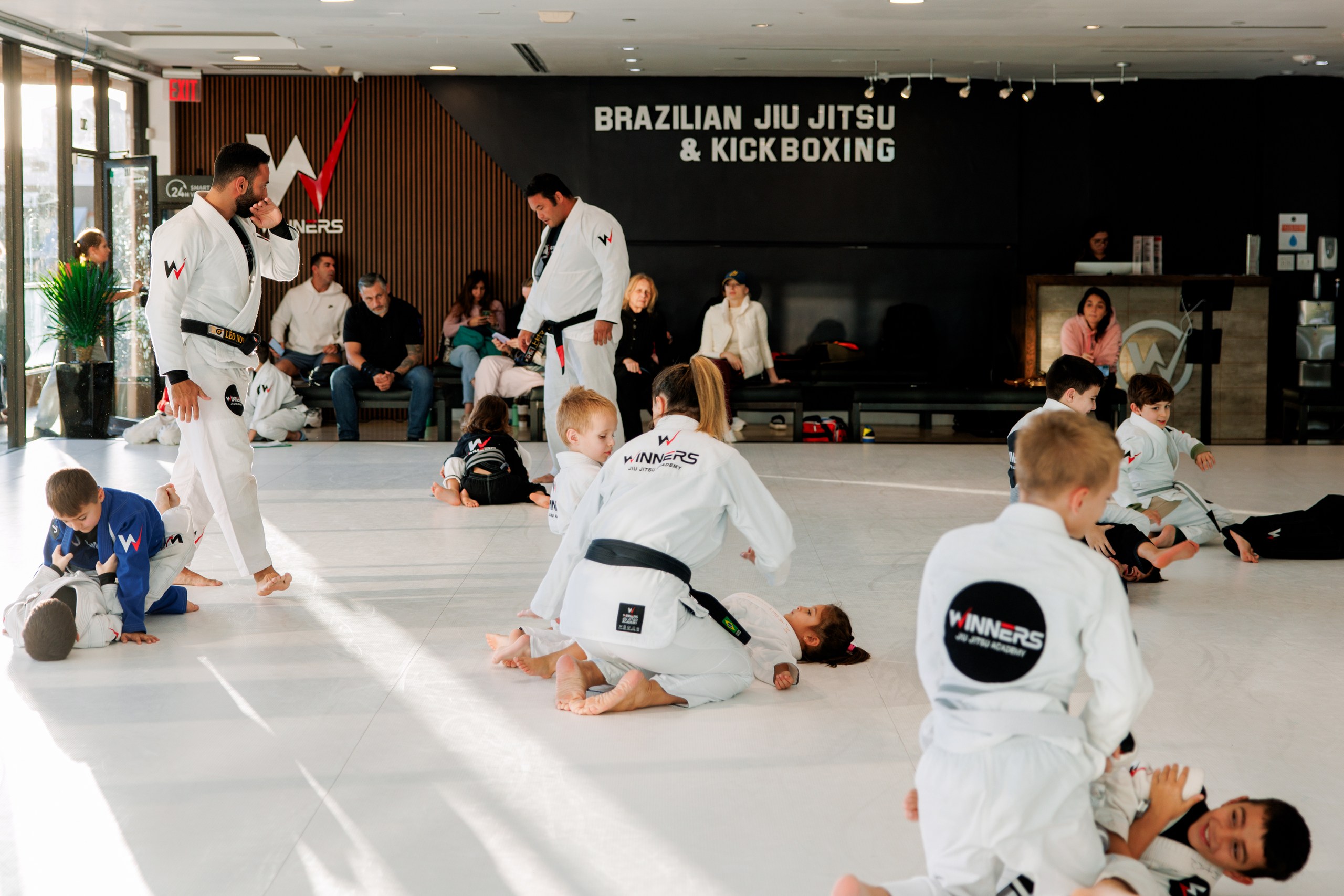
Winners Jiu-Jitsu Academy operates out of 17100 Collins Avenue in Sunny Isles Beach. We run industrial HVAC rated for our training floor, disinfect mats between every class, and have storm protocols in place for hurricane season. Most of our students have trained here through multiple summers — the ones who've been around for years are often the best resource on how to make Miami BJJ sustainable long-term.
If you're a transplant — welcome. Your first summer will be the hardest one. After that, it gets easier, and by year two you'll wonder how anyone trains in a dry climate.
Book a free trial or call (786) 527-2462. Come find out what Miami BJJ actually feels like.